Guide
How to Dress for Skiing: The Ultimate Layering Guide
March 3, 2026 By Powder Seeker Team
Transparency: This post may contain affiliate links. If you make a purchase through them, we may earn a small commission at no extra cost to you.
How to Dress for Skiing: The Ultimate Layering Guide
The quickest way to ruin your first ski trip is by wearing the wrong clothes. Too many layers, and you’ll sweat (which quickly turns to freezing cold). Cotton? A massive mistake.
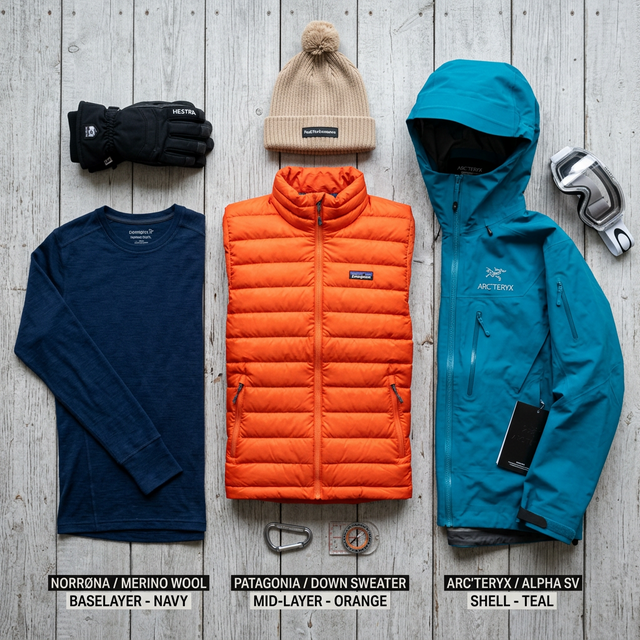
The secret to staying perfectly comfortable on the mountain is the 3-layer system. Let’s break it down.
Layer 1: The Base Layer (Moisture Wicking)
Your base layer sits directly against your skin. Its primary job is not to keep you warm—it is to pull sweat away from your body so you stay dry.
- DO WEAR: Merino wool or synthetic polyester (like Capilene).
- DO NOT WEAR: Cotton. Cotton absorbs sweat, holds onto it, and will freeze against your skin the moment you ride a cold chairlift.
- What you need: Long-sleeve top and full-length bottoms (leggings).
Layer 2: The Mid-Layer (Insulation)
This layer traps your body heat. The great thing about the mid-layer is that you can adjust it based on the weather.
- Cold Days (Below 20°F / -6°C): Wear a lightweight down jacket or synthetic puffy vest (like the Patagonia Nano Puff).
- Warmer Days: A simple microfleece pullover is perfect.
- Spring Skiing: You might even skip this layer entirely!
Layer 3: The Outer Shell (Weather Protection)
Your outer layer must be windproof and waterproof. It protects you from falling snow, rain, and biting wind.
- Hardshell Jackets: These have zero insulation but offer maximum weather protection (Gore-Tex). They are highly breathable.
- Insulated Jackets: Combine the mid-layer and outer shell into one. They are cheaper and warmer, but offer less flexibility on hot spring days.
- Pants: Buy dedicated ski or snowboard pants with waterproof ratings of at least 15,000mm.
The Accessories That Matter
- Ski Socks: Only wear one pair. Doubling up cuts off circulation and makes your feet colder. Buy thin, merino wool ski-specific socks.
- Gloves vs. Mittens: If you get cold hands easily, always choose mittens. They keep your fingers together, generating much more heat.
- Neck Gaiter: A simple fleece or wool tube goes around your neck and over your mouth. Never use a long scarf—it is a massive safety hazard if it gets caught in a ski lift!